Tooting Locksmiths Service Team
Local locksmith team
9 Sep 2026 10 min read
Losing your house keys is one of those moments that shifts a perfectly ordinary day sideways. One minute you are heading home from Tooting Market or stepping off the Northern line at Tooting Broadway, and the next you are standing on your doorstep wondering what on earth to do next. The good news is that there is a clear, calm sequence of steps that gets most people back inside quickly and safely — and knowing them in advance makes the whole situation far less stressful.
This guide walks you through exactly what to do if locked out of your house: from the sensible checks you can do yourself, to the point at which calling a professional locksmith London is simply the right call. We will also cover what comes after you are back inside — specifically whether you need a cylinder replacement, a full lock change, or nothing at all.
## Step One — Retrace Before You Panic
Before anything else, give yourself five minutes to retrace your steps properly. Check every pocket, bag compartment, and jacket you have been wearing. If you drove or used public transport, think about where you last physically held your keys — was it locking the door this morning, or at a shop, a café, a friend's flat? Ring the last place you visited; lost keys are handed in more often than people expect. If you have a spare set at a family member's or neighbour's property nearby, now is the time to call them.
Also think about whether any other entry point to your home is accessible. A ground-floor window left on the latch, a back gate that leads to an unlocked garden door — these are worth checking, provided you can do so safely and without causing any damage. If you live in a block of flats, your letting agent or housing association may hold a master key for communal areas, though they rarely cover individual flat doors. Never attempt to force a lock or a door frame yourself: you are likely to cause expensive damage and may still not get in.
## What to Do When Locked Out of House — Calling the Right Help
If the spare key option is not available and no other entry point is open, the practical next step is to call a professional emergency locksmith London. A skilled locksmith can open the vast majority of doors without damaging the lock or the door — using non-destructive methods that protect your existing hardware. This is both faster and far less costly than the damage that forcing a door can cause to frames, hinges, and multipoint locking mechanisms.
When you call, the locksmith will ask you a few straightforward questions: the type of door (timber, uPVC, composite), the type of lock visible from the outside (Yale-style nightlatch, euro cylinder, 5-lever mortice deadlock), and your address and postcode district. These details let them bring exactly the right tools and, if a part needs replacing, the right components. You will be given a clear, up-front price before anyone sets off — the final quote depends on factors such as the lock and door type, the time of day (evenings, weekends, and bank holidays affect call-out charges), and any parts required. There are no surprise figures on arrival. Our team at Tooting Locksmiths covers the SW17 and surrounding areas and we are usually with you in about 30 minutes of your call.
## Proving Ownership — What to Have Ready
A trustworthy 24 hour locksmith London will always ask for evidence that you are entitled to be in the property before carrying out any work. This is not bureaucracy for its own sake — it is a basic safeguard that protects you and your neighbours. Having the right documents ready speeds things up considerably.
Useful items to have to hand include a driving licence, a utility bill, a bank statement showing the address, a tenancy agreement, or a piece of post addressed to you at the property. If you are a tenant and cannot produce anything on the spot, your letting agent can sometimes provide written confirmation. If none of this is available, a locksmith may ask you to contact a family member who can vouch for you, or in genuinely complex cases may decline to proceed — which, again, is the responsible approach. If you believe someone else is in your property without your permission, call 999 and let the police handle it.
## Back Inside — Should You Change the Lock or Just the Cylinder?
Once you are back indoors, the question of what to do about security is worth thinking through carefully. The answer depends on what actually happened to your keys. If you simply dropped them somewhere and are confident they are not traceable to your address, you may not need to do anything beyond retrieving or replacing a spare. But if the keys are genuinely lost in a public place, or if your keyring had anything on it that could identify your home — a loyalty card with your postcode, a fob with your address, a tag from your letting agent — then changing the cylinder or the lock is the sensible and proportionate response.
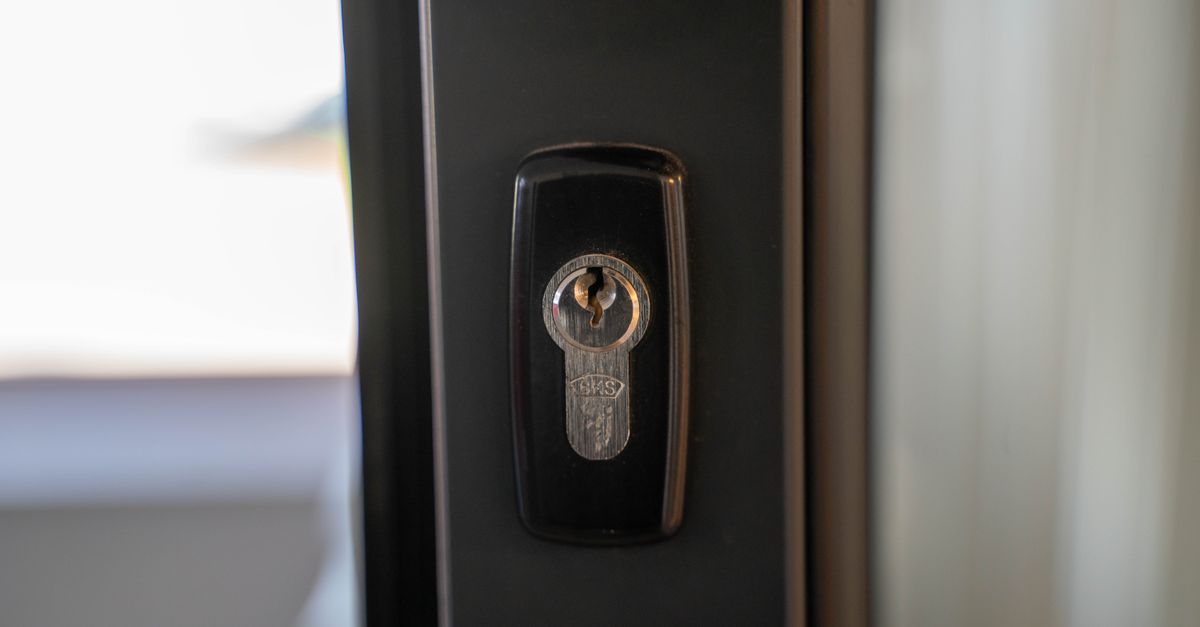
On a typical timber front door, the euro cylinder (the oval barrel that your key turns) can be swapped out quickly and cost-effectively during a lock change London visit without replacing the entire lock body. If your door has a Yale-type nightlatch, the cylinder or the whole case can be replaced. For uPVC and composite doors with multipoint locks, the euro cylinder is again the component that changes — and this is also the moment to consider upgrading to an anti-snap, TS007 3-star rated cylinder, which resists the snapping attacks that are a known vulnerability on many uPVC doors London-wide. If the locksmith found that your existing lock was already worn, damaged, or below the standard your insurer specifies (many policies ask for a BS3621-rated mortice deadlock on timber doors), a full door lock replacement London makes sense at the same time. A trained locksmith can walk you through the options and explain exactly what your door needs — there is no obligation to upgrade beyond what is genuinely useful.
## Staying Ahead of It — Practical Prevention
Losing keys once is an inconvenience; losing them twice with no plan in place is avoidable. A few simple habits reduce the risk significantly. Keep a spare key with someone you trust — a family member, a close friend, or a neighbour — rather than under a doormat or in a fake rock, which are well-known hiding spots. If you live alone and there is no obvious trusted contact, ask your letting agent whether they hold a spare; many managing agents for blocks of flats do.
It is also worth reviewing the condition of your locks periodically. A euro cylinder that is stiff, a nightlatch that does not spring back cleanly, or a mortice deadlock that takes two attempts to engage are all early signs of wear. A uPVC door lock repair London visit to service or replace worn components before they fail is far less disruptive than an emergency callout. If you are a landlord with multiple properties across Tooting and neighbouring areas such as Balham, Streatham, or Mitcham, it is good practice to change the cylinder between tenancies — not because you distrust outgoing tenants, but because you have no way of knowing how many copies of a key were made during the tenancy. For anything you are unsure about, our team is available around the clock — call 020 3675 7793 and we can talk through the right approach for your specific door and lock.
## What to Expect From a Locksmith Callout — Locked Out London to Your Door
When you call Tooting Locksmiths after finding yourself locked out London can feel like a large and anonymous place, but our mobile team operates locally and knows these streets well. We cover SW17 and the surrounding postcodes, and we send a locksmith straight away when you call. The process on arrival is straightforward: ownership verification, a brief assessment of the door and lock, a confirmed quote, and then the work itself — most non-destructive openings are completed within a few minutes once the locksmith is at the door.
If a part needs replacing — a new cylinder, a lock case, a multipoint mechanism — the locksmith will carry common components in the van and can complete the upvc door lock repair London or lock change London on the same visit in most cases. Everything is explained before it is done, and you will not be asked to approve any additional work without understanding exactly what it involves and why. Our goal is simply to get you back inside safely and leave your door as secure as it was — or more so — when we leave.
Frequently asked questions
What should I do if I am locked out of my house in the middle of the night?+
The steps are the same whatever the time: check for a spare key with a trusted contact, verify whether any other entrance is safely accessible, and if neither option is available, call a 24 hour locksmith London who covers your area. Tooting Locksmiths operates around the clock, including evenings, weekends, and bank holidays. When you call 020 3675 7793, we will confirm an up-front price that accounts for the time of day and send someone straight away. We are usually with you in about 30 minutes.
Will the locksmith damage my door to get me back in?+
In the vast majority of cases, no. A trained locksmith uses non-destructive entry techniques suited to the specific lock and door type — euro cylinder locks, Yale nightlatches, and multipoint uPVC mechanisms can usually all be opened without marking the door or the frame. Damage is only necessary in rare situations where a lock has been badly jammed or is already broken. The locksmith will always explain the situation before proceeding and confirm your options.
Should I change the lock or just the cylinder after losing my keys?+
It depends on the risk. If your lost keys cannot be traced back to your address, the urgency is lower. If they were lost in a public place alongside anything that could identify your home — a piece of post, a loyalty card, an estate agent tag — then changing the cylinder is the prudent step. On most uPVC and composite doors, only the euro cylinder needs replacing, not the entire lock body. On older timber doors with a 5-lever mortice deadlock, the whole lock case may need replacing if it is below the BS3621 standard your insurer requires. A locksmith can assess your specific door on the visit and recommend only what is genuinely necessary.
How do I know if the locksmith is legitimate before I let them work on my door?+
Ask for the locksmith's name when you call and confirm it matches the person who arrives. A professional should be willing to show identification and should ask you for proof that you live at the property before starting any work — if they do not ask, that itself is a warning sign. Tooting Locksmiths is fully insured, and our team will always carry out ownership verification before proceeding. We confirm all pricing clearly on the phone before anyone sets off, so there are no unexpected figures on the doorstep.