Tooting Locksmiths Service Team
Local locksmith team
2 Sep 2026 13 min read
You push the key in, give it the usual turn — and nothing. It resists, grinds, or simply refuses to budge. It is one of those moments that can stop your day completely, whether you are standing on a Tooting doorstep at midnight or trying to get through your front door after a long shift. A key that will not turn is not always a lockout, but it can quickly become one if you force it. Understanding what is actually going wrong inside the lock will help you decide whether a gentle fix is worth trying or whether it is time to put the key down and call a professional locksmith London.
This guide walks you through the real reasons a key stops turning — worn cylinders, dropped door frames, compacted debris, and more — what you can safely attempt yourself, and the point at which trying harder will cost you far more than calling for help. If you are already past that point and need someone now, call 020 3675 7793 and we will send a locksmith straight away, usually with you in around 30 minutes anywhere across the Tooting area.
## Why Your Key Has Stopped Turning: The Most Common Causes
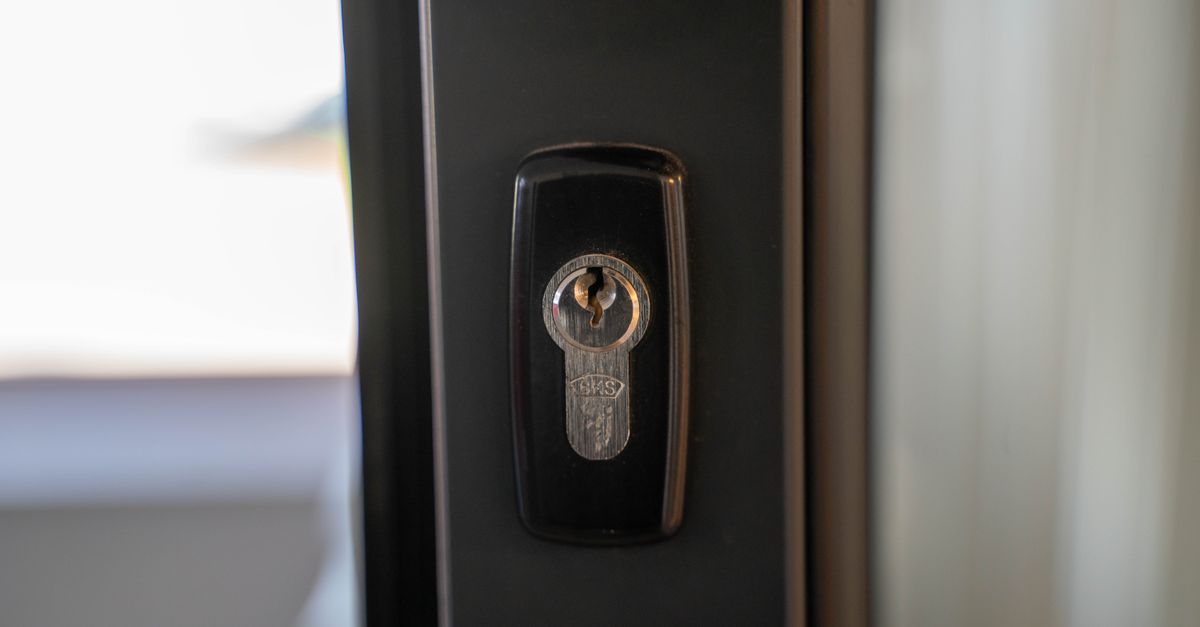
There are several distinct reasons a key will not turn, and correctly identifying which one applies to you will prevent unnecessary damage. The most frequent culprit on older London properties is a worn or dirty euro cylinder — the barrel itself has degraded over years of use, the internal pins are sticking, or accumulated grime and dried lubricant have seized the mechanism. On uPVC and composite doors, which are common throughout Tooting from the Victorian terraces off Mitcham Road to the newer builds near Tooting Bec Common, the multipoint locking system relies on the door sitting precisely in its frame. If the door has dropped even a few millimetres — which happens as hinges wear or timber frames settle — the locking points no longer align with their keeps, and the cylinder cannot complete its rotation because the mechanism is under load.
A second common cause is a damaged key rather than a damaged lock. Keys that have been cut from a worn master, bent slightly over time, or used as makeshift tools develop tiny deformations that catch on the internal pins. Sometimes the problem is seasonal: timber doors expand in damp weather, putting pressure on the latch and making an otherwise functional lock suddenly stiff. On 5-lever mortice deadlocks — the type most home insurers require to BS3621 standard — worn levers or a bolt that has not been fully retracted before locking can cause the same stiff resistance. In each case, the underlying message is the same: something inside or around the lock is under stress, and applying more force will almost always make it worse.
## What to Try First — Gentle Steps Before You Call
If the key has only just started feeling stiff, there are a small number of safe, sensible things worth trying before concluding you need an emergency locksmith London. First, check the key itself under a good light. Look for visible bends, burrs on the blade, or any sign the tip has been deformed. If you have a spare key, try that instead — a fresh cut on an undamaged blank will confirm whether the problem is with the key or the lock. Never attempt to straighten a bent key by force; it will snap inside the cylinder and create a far more serious problem. Second, apply a small amount of dry graphite lubricant or a PTFE-based spray into the keyhole — not WD-40, which is a water displacer rather than a lock lubricant and will attract more grime over time. Insert and withdraw the key a few times gently without rotating it, then try turning again with steady, even pressure.
Third, if you are dealing with a uPVC or composite door, lift the door handle firmly upward while attempting to turn the key. This realigns the multipoint lock's bolt work and takes the load off the cylinder, which is often all that is needed when a door has dropped slightly on its hinges. Similarly, try pushing the door lightly into the frame at the same time — if the door has warped outward, closing the gap can free the cylinder. If none of these steps produce a smooth turn within two or three calm attempts, stop. Continuing to force the key risks snapping the blade inside the barrel, shearing the cylinder, or damaging the multipoint mechanism — any of which will escalate your costs and your wait time considerably. A stiff lock that becomes a broken lock is not a simpler problem; it is a harder one.
## When to Stop and Call an Emergency Locksmith London
There is a clear line between gentle troubleshooting and forcing entry, and crossing it rarely ends well. If the key is turning partially but catching, if you can feel grit or resistance deep inside the cylinder, or if the lock has been difficult for weeks and is now completely seized, you are past the point of DIY fixes. The same applies if the key snaps — partial or complete — or if you notice the cylinder itself is moving or wobbling when you turn the key, which is a sign the cylinder retaining screw has failed or the barrel has been attacked. These are jobs for a trained locksmith, not a pair of pliers.
Knowing what to do if locked out of your house in this situation is straightforward: do not attempt to remove the cylinder yourself, do not try to push the broken blade further in, and do not try to manipulate the lock with any improvised tool. Check whether you have a spare key with a trusted neighbour, or whether another door — a back door or a flat's communal entrance — is accessible. If you are a tenant, your letting agent or landlord may hold a spare set. Beyond those options, call a professional. Our team operates as a 24 hour locksmith London service, covering Tooting and the surrounding areas around the clock, including evenings, weekends, and bank holidays. Call 020 3675 7793 and we will confirm an exact up-front price before anyone sets off — there are no hidden charges added on arrival.
## Lock Change London and Cylinder Replacement: What Happens Next
[10] Once a locksmith has assessed your door, the outcome will fall into one of two categories: the lock can be serviced and restored to full working order, or it needs to be replaced. For a seized or heavily worn euro cylinder — the kind found in most uPVC door lock repair London jobs — a cylinder replacement is usually the most practical and cost-effective resolution. The old barrel is removed, the new one is fitted to the existing multipoint lock body, and the door is tested through its full range of operation. This is not the same as simply changing the cylinder so old keys no longer work; it is a physical swap of the mechanical component, and the opportunity to upgrade at the same time.
If your insurer requires a BS3621 mortice deadlock, or if the existing hardware is too far gone to service reliably, a full lock change London may be the right call. This is also worth considering if you have recently moved into a property and do not know how many sets of keys exist for the current locks — a door lock replacement London gives you complete confidence in who has access. When it comes to anti-snap protection, Tooting properties with euro cylinder locks are worth assessing carefully: standard cylinders can be snapped with brute force in seconds, whereas a TS007 3-star rated anti-snap cylinder resists this type of attack significantly better. We carry a range of quality cylinders suited to both uPVC and timber doors and can advise on the right specification for your door and your insurer's requirements. The final price depends on the lock type, the parts required, your location, and the time of day — all confirmed with you before we begin.
## Locked Out London: Prevention Is Always Cheaper Than a Callout
The best time to think about lock health is before you are standing on the pavement at 11pm wondering what to do when locked out of your house. Locks do not usually fail without warning — they give signals first. Stiffness that gradually worsens, a key that only works at a particular angle, or a latch that needs a firm shoulder on the door to engage are all early signs that the cylinder or the door alignment needs attention. Addressing these when they are minor inconveniences rather than full failures is almost always quicker and less disruptive.
A few practical habits make a real difference. Keep a spare key with someone you trust — a neighbour, a family member nearby, or your letting agent if you rent. Check your door hinges annually; a dropped door is one of the most common causes of a seized multipoint lock, and adjustable hinges can usually be reset without replacing any hardware. If your property has a communal entrance, keep the communal door key separate from your flat key so that losing one does not mean losing access to both. And if a lock starts to feel anything less than smooth, have it looked at before it becomes a locked out London emergency. Our team is available 24/7 for non-urgent assessments just as readily as for middle-of-the-night callouts — call 020 3675 7793 and we will arrange a time that suits you.
## 25 Specific Services We Provide Across Tooting and London
Our mobile locksmith team covers the full range of residential lock and door security work across Tooting, Balham, Streatham, Colliers Wood, Mitcham, and throughout South West and central London. Here is a full picture of what we handle: euro cylinder replacement on uPVC doors; euro cylinder replacement on composite doors; anti-snap cylinder upgrades to TS007 3-star; 5-lever mortice deadlock supply and fitting; Yale-type nightlatch installation and repair; multipoint lock mechanism repair; multipoint lock mechanism replacement; uPVC door lock repair; door alignment and hinge adjustment; communal entrance door lock replacement; flat front door lock change; timber door lock replacement; seized cylinder removal without damage to the door; broken key extraction from cylinders; broken key extraction from mortice locks; non-destructive entry when locks have failed; lock servicing and lubrication on stiff or resistant cylinders; BS3621 compliant lock upgrades for insurance purposes; door frame and keep repair following a forced entry; additional lock fitting to improve door security; patio door lock repair; French door lock repair; deadlock installation on rear doors; sash window lock fitting; and emergency locksmith response across London 24 hours a day, every day of the year.
## Pricing, Credentials, and What to Expect When You Call
When you call 020 3675 7793, the first thing we do is ask about your situation so we can send the right person with the right parts. We will confirm an exact price before anyone leaves — the quote reflects your lock type, the parts required if any, your location within our coverage area, and the time of day. There is a call-out charge, as there is with any mobile trade, and we are upfront about it on the phone rather than presenting surprises on arrival. We are fully insured, and our locksmiths are trained and experienced across the full range of residential lock types found in London properties.
We know the streets around Tooting well — from the dense Victorian terraces near Tooting Broadway station to the flats above the shops on Upper Tooting Road, the period conversions off Garratt Lane, and the newer developments backing onto Tooting Bec Common. That local familiarity means we route efficiently and arrive quickly. If you are already in the stressful position of not knowing what to do if you get locked out of your house, the most useful thing you can do right now is call us at 020 3675 7793. We answer around the clock and will have someone with you as soon as possible.
Frequently asked questions
What should I do if my key won't turn at all and I can't get inside?+
Start by staying calm and not forcing the key. Try your spare key if you have one, or ask a trusted neighbour or letting agent whether they hold a copy. If the key still will not turn or you have no spare, call a professional locksmith rather than attempting to force the lock or the door. Forcing a seized lock can cause the key to snap inside the barrel or damage the multipoint mechanism, which turns a straightforward job into a more complex and costly one. We are available 24 hours a day — call 020 3675 7793 and we will get a locksmith to you as quickly as possible.
My uPVC door lock is stiff but the key still turns if I push hard — is that a problem?+
Yes, it is worth taking seriously. A uPVC multipoint lock that requires heavy pressure to turn is usually either misaligned — the door has dropped on its hinges so the bolt work is under load — or the euro cylinder itself is wearing out. In both cases the problem will worsen over time and is likely to result in a fully seized lock or a snapped key at the least convenient moment. Lifting the door handle upward while turning the key can relieve the load temporarily, but a proper fix means either adjusting the door hinges or replacing the cylinder. We can assess and resolve this during a non-emergency visit — it is far less disruptive than a late-night callout.
How much does it cost to change the lock on a front door in London?+
The price depends on several factors: the type of lock involved (euro cylinder, 5-lever mortice deadlock, multipoint mechanism), the specific parts required, your location, and whether the callout is during the day or overnight, at a weekend, or on a bank holiday. We always confirm an exact up-front price on the phone before we set off, so there are no surprises. Call 020 3675 7793 and describe your door and lock type — we will give you a clear figure before agreeing anything.
If my key snaps inside the lock, is the whole lock ruined?+
Not necessarily. A broken key inside a cylinder can often be extracted by a trained locksmith without replacing the lock, using specialist extraction tools that do not damage the barrel. Whether the lock itself then needs to be replaced depends on its age and condition — if the cylinder was already worn or the lock is not to current security standards, it is usually worth upgrading at the same time. We will assess the situation when we arrive and explain the options before doing any work.