Tooting Locksmiths Service Team
Local locksmith team
21 Oct 2026 10 min read
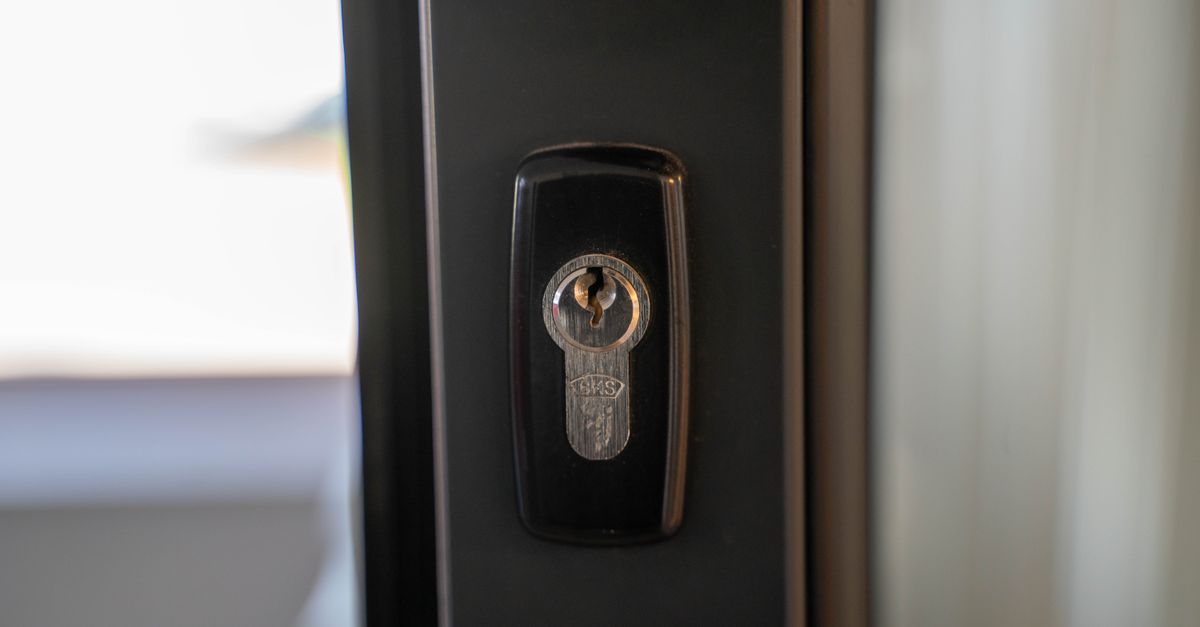
If you live in Tooting — whether that is a Victorian terrace off Tooting Bec Road, a ground-floor flat near Tooting Broadway, or a newer build close to Figge's Marsh — there is a reasonable chance your front door contains a euro cylinder lock. Euro cylinders are the barrel-shaped locks fitted to most uPVC and composite doors across London, and for years they were the quiet weak point that burglars exploited using a simple technique called lock snapping. The good news is that the problem is well understood and the solution is straightforward: an anti-snap cylinder that meets the TS007 standard.
This article explains exactly why euro cylinders snap, what the TS007 star ratings actually mean in practical terms, and how to check tonight whether your own door is adequately protected. If you read it and decide you want an upgrade, our team of experienced locksmiths is available across the Tooting area and the wider London area around the clock — call 020 3675 7793 and we can talk you through the options before anyone travels out.
## Why Euro Cylinders Snap — and Why It Matters for Locksmith London Customers
A standard euro cylinder sits proud of the door furniture by several millimetres. That small protrusion is enough for a burglar to grip it with an adjustable spanner or a pair of mole grips, then snap it cleanly in two with a sharp sideways jerk. The whole process takes under a minute and makes very little noise — no broken glass, no forced frame, nothing that would alert a neighbour or trigger a standard alarm. Once the cylinder snaps, the internal cam that holds the lock bolt retracts automatically, and the door simply swings open.
Lock snapping became widely documented in the early 2010s and was particularly prevalent across south London, where high-density terraced streets mean burglars can move quickly between properties and blend in with foot traffic. The technique does not require skill or specialised tools — the same equipment sold in every hardware shop will do the job on a vulnerable cylinder. That is precisely why a straightforward mechanical upgrade is so effective: you are removing the attack surface entirely rather than relying on an alarm or a camera after the fact.
## What TS007 Stars Actually Mean — a Practical Guide to Lock Change London
TS007 is the British Standard kite mark for door security hardware — specifically for cylinders, door handles, and escutcheons (the cover plates around the lock). Products are rated one, two, or three stars, and the star total is what insurers and police crime-prevention officers look at when advising on residential security. A single star on its own provides only the most basic level of resistance. Two stars is an improvement but still falls short of the top tier. Three stars — achievable either with a single three-star cylinder alone, or by combining a one-star cylinder with a two-star door handle or escutcheon — is the benchmark that satisfies most home insurance policies and meets the requirements of the Secured by Design initiative.
In practical terms, a TS007 three-star anti-snap cylinder is engineered with a deliberate break point built into the front section of the barrel. If someone attempts to snap it, the front portion shears off cleanly at that designed weak point, but the rear section — which contains the actual locking mechanism — stays intact and functional. The bolt remains thrown, and the door stays locked. Some higher-specification cylinders also include anti-pick pins, anti-drill hardened steel inserts, and anti-bump profiles, giving layered resistance against multiple attack methods. When we carry out a door lock replacement London homeowners often ask whether they need all those features; the honest answer is that for most standard residential doors in Tooting, a reputable TS007 three-star anti-snap cylinder covers the realistic threat picture very well.
## How to Check Your Own Door Tonight — Signs You Need a uPVC Door Lock Repair London
Start at your front door with the door closed but unlocked. Look at where the lock cylinder sits relative to the door furniture. If the end of the cylinder protrudes more than three millimetres beyond the face of the handle plate or escutcheon, it is exposed enough to be gripped and snapped. Some older uPVC doors have no escutcheon at all — just the cylinder sitting directly in a cut-out in the door panel — and those are particularly vulnerable. If you can see the cylinder bulging out clearly, that is your first indicator.
Next, check whether there is any kite mark stamped on the cylinder itself, usually on the visible end face or along the barrel. If you see no marking, or if it reads only 'BS EN 1303' without any TS007 star rating, the cylinder does not carry anti-snap protection. While you are there, check for play in the cylinder: insert your key and try gently waggling the barrel sideways without turning it. Any noticeable movement suggests the cylinder is worn and may be easier to attack. Finally, look at the door handle plate — a loose, rattling handle plate on a uPVC door can compromise the whole locking system because the multipoint lock mechanism relies on that handle to lift the hooks and rollers into the frame. Loose handles and an unrated cylinder together are a strong case for a uPVC door lock repair London service sooner rather than later. If you are unsure what you are looking at, it is worth a quick call to 020 3675 7793 — our team can walk you through what to check over the phone, and if a visit is needed we can be with you, typically within around 30 minutes.
## Emergency Locksmith London: What Happens When a Snap Has Already Occurred
Occasionally we receive calls from residents who have come home to find the front portion of their cylinder on the doorstep or pavement — the classic aftermath of a snap attack. In that situation the priority is to regain entry safely and then secure the door immediately. We want to be clear here: we do not provide instructions for bypassing locks, and if you have been the victim of a break-in the right first call is to the police on 999, then to us. Our role is to attend, assess the door, replace the damaged cylinder and door furniture, and wherever possible get the door back to a secure — and improved — standard before we leave.
In some cases a snap attack leaves the rear portion of the cylinder jammed in the lock body, which makes the door difficult to open even from the inside. That is a job for an experienced locksmith with the right tools; attempting to force it yourself risks damaging the multipoint lock mechanism inside the door, which turns a cylinder replacement job into a much more involved repair. As an emergency locksmith London service we respond to these situations day and night, including weekends and bank holidays, because a compromised door at any hour is a security and safety issue that cannot wait until morning.
The cost of an emergency call-out depends on several factors — the type of cylinder and door furniture required, whether the work is carried out in the evening, overnight or on a bank holiday, travel to your specific street in Tooting or elsewhere in our London coverage area, and what condition the existing lock body is in. We confirm the exact price before any work begins, so there are no surprises when the job is done.
## Choosing the Right Anti-Snap Upgrade — 24 Hour Locksmith London Advice
Not all anti-snap cylinders are equal, and the range of products on the market can be bewildering. Our practical advice is to focus on three things: the TS007 three-star rating (look for the kite mark on the packaging and on the cylinder itself), the correct size for your door (euro cylinders are measured in millimetres from the centre screw outward to each end, written as something like 35/45 — getting this wrong means the cylinder either sits too proud or will not reach the cam), and a reputable manufacturer whose products have been independently tested.
What we do not recommend is buying a cylinder online and attempting to fit it yourself unless you are genuinely confident with the process. Fitting a cylinder even one millimetre too long recreates the exposed protrusion problem you were trying to solve. Fitting it too short means the cylinder may not engage the cam reliably, leaving the door insecure in a different way. A skilled locksmith will measure the existing cylinder, check the door alignment, confirm the multipoint lock body is in good condition, and fit the replacement correctly so that it sits flush, operates smoothly, and meets the TS007 standard. As a 24 hour locksmith London team, we carry a range of tested anti-snap cylinders so that in most cases the upgrade can be completed on the same visit — no waiting for parts to be ordered.
Frequently asked questions
How do I know if my front door already has an anti-snap cylinder fitted?+
The most reliable method is to check for a TS007 kite mark on the cylinder itself — it is usually stamped on the visible end or along the side of the barrel. If you cannot see any marking, or the marking references only BS EN 1303 with no star rating, the cylinder is likely not anti-snap rated. You can also look for a visual break line or colour-coded section near the front of the barrel, which indicates the engineered snap point that anti-snap cylinders are designed with. If you are still unsure, our team is happy to take a look and confirm — call 020 3675 7793 at any time and we will talk you through it or arrange a visit.
Will my home insurance policy require an anti-snap cylinder?+
Many home insurers — particularly those offering policies on properties with uPVC or composite doors — now specify a TS007 three-star rated cylinder as a condition of cover, or offer a reduced excess if one is fitted. The exact requirement varies between insurers, so it is worth checking your policy documents or calling your insurer directly. What is consistent across most policies is the expectation of a British Standard-rated lock. If your door currently has a standard, unrated euro cylinder, upgrading to a TS007 three-star anti-snap cylinder not only improves your security but ensures you are not at risk of an insurance claim being queried on the grounds that your locks did not meet the specified standard.
My door is a uPVC flat door in a block of flats — does anti-snap still apply to me?+
Yes, it applies in exactly the same way. Most purpose-built flats and converted flat doors in Tooting and across London use uPVC or composite construction with a euro cylinder multipoint lock, and those cylinders are just as vulnerable to snapping as any other. The communal entrance door to a block of flats is a separate matter — that is usually managed by the freeholder, managing agent, or housing association — but your own flat's front door is your responsibility and your insurer's concern. If you are a tenant, check your tenancy agreement and speak to your letting agent, as some landlords are receptive to security upgrades, particularly where it protects their own property.
How long does a cylinder replacement take, and will my door work properly afterwards?+
In most cases, swapping a euro cylinder on a uPVC or composite door takes between 20 and 45 minutes once a locksmith is on site, assuming the existing lock body is undamaged and the correct cylinder size is available. After fitting, the locksmith should test the lock both from inside and outside the door, check that the multipoint hooks and rollers engage the frame correctly when the handle is lifted, and confirm the door sits flush in the frame. If the door has dropped slightly on its hinges — a common issue in older uPVC frames — that may need addressing at the same time to ensure the cylinder operates without stiffness. Our team will flag any such issues and confirm the full scope and price before carrying out any additional work.